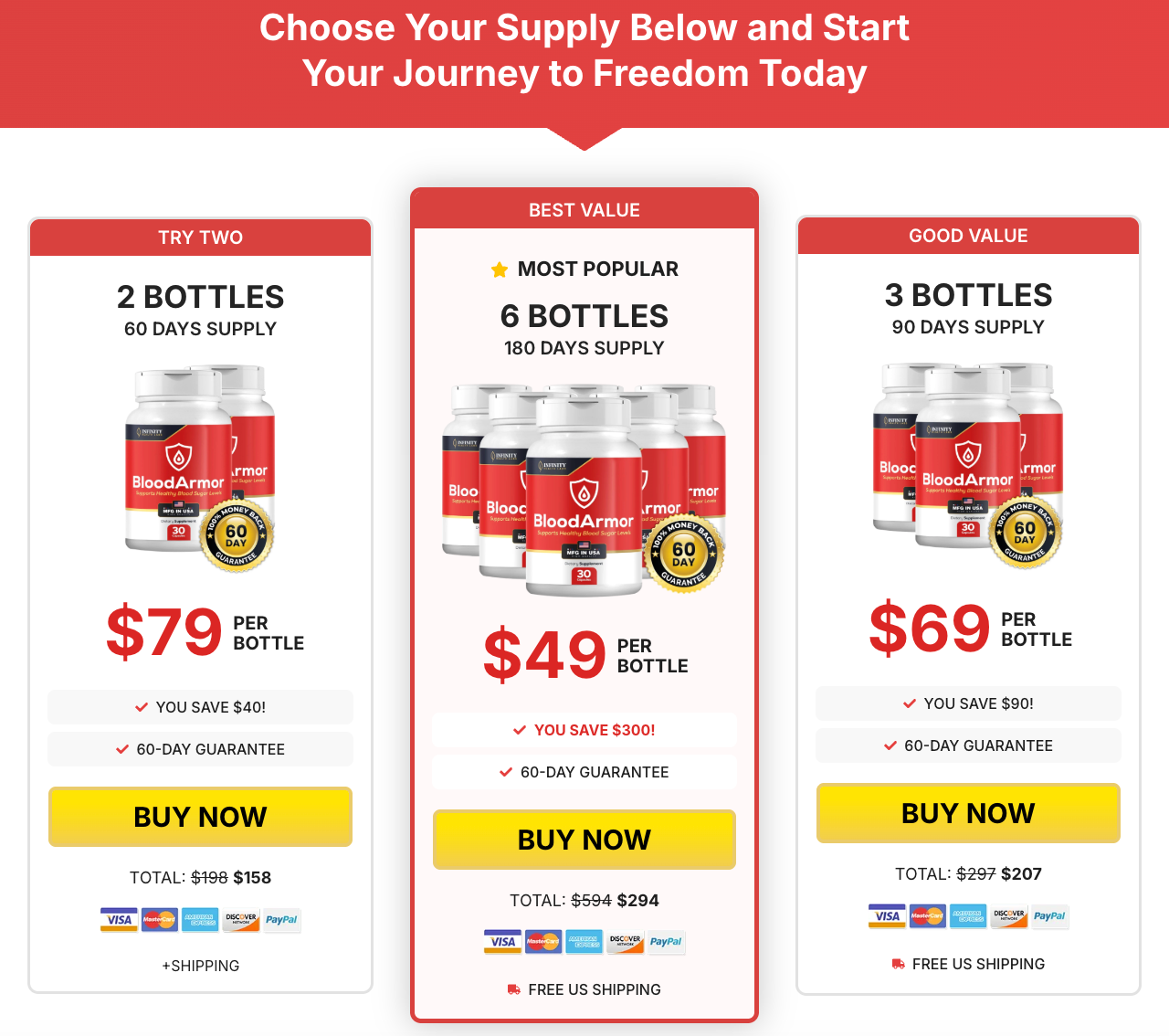
The package decision starts with the total commitment
Promotional product images may emphasize a per-bottle saving, but buyers ultimately commit to a full transaction. Blood Armor artwork supplied for this project depicts two-, three- and six-bottle purchase configurations. This does not independently confirm current stock, shipping eligibility, taxes, subscription status or final checkout prices. Before choosing among packages, open the seller’s current offer and record the all-in order total. A large package may reduce unit cost while increasing financial exposure if the product is unsuitable or the buyer later changes plans.
Calculate price per bottle and serving correctly
The useful comparison is total paid divided by the number of bottles or verified number of servings, with shipping and other mandatory charges included. If each bottle contains a different number of servings than assumed, a simple per-bottle calculation may distort value. Do not estimate the supply period using an unverified direction of use. First confirm servings per container and recommended serving frequency from the current Supplement Facts panel. Then calculate daily cost and implied supply duration. If any ingredient or package field is unknown, show the formula and mark the result pending rather than inventing a number.
Compare cash outlay with flexibility
A two-bottle order may require less initial expenditure; a six-bottle order may offer a lower advertised unit cost. The right decision depends on budget, willingness to commit, shipping costs and personal suitability. There is no reason to imply that the largest package produces better health outcomes. Product efficacy, if demonstrated, is not inferred from the number of bottles purchased. A buyer interested mainly in product evaluation may also prefer to resolve formulation, safety and merchant-support questions before committing to a larger quantity.
Distinguish promotions from confirmed discounts
Advertising banners can display crossed-out prices, 'limited' offers and guarantee emblems. Treat these as claims by the merchant until the checkout confirms the actual charge and a verifiable offer period. A legitimate comparison requires an authentic normal reference price and current transaction data. Avoid speculative savings percentages and countdowns. If the merchant has several packages with different apparent discounts, state the precise conditions for each and distinguish any optional upsell, recurring billing or separately charged delivery.
Know exactly what the guarantee covers
A prominently displayed satisfaction guarantee should be read together with its written conditions. Check the number of days, when the period starts, whether opened products qualify, which address accepts returns, who pays return postage and how refunds are issued. Screenshots alone may not convey these limitations. Preserve a copy of the guarantee in effect when the purchase was completed. Where published policies conflict with banner language, do not make definitive statements until the merchant clarifies the discrepancy.
Shipping, taxes and destination matter
The same advertised package can lead to different final costs depending on country or delivery location. Buyers should confirm eligible shipping regions, delivery charges, estimated fulfilment, taxes and any customs responsibilities. Do not assume a global English-language offer will ship to all countries. If a market-specific MenPS or US Blood Armor page is created, it must have actual verified local information rather than simply a different country word in its title. Until such information is established, the global package comparison can answer the purchase decision accurately.
Use a clear decision matrix
Compare the three configurations across six fields: verified bottles, verified servings, all-in cost, price per serving, expected supply and applicable return rules. Include one explanatory row for commitments such as subscription enrollment, if present. Record the merchant’s actual transaction terms and recheck them before publication because price and shipping are time-sensitive. A meaningful value comparison can highlight a lower cost where verified, but should also explain the trade-off between unit price and higher total expenditure.
When to proceed to checkout
Consider a purchase only after confirming the current formula, personal suitability, merchant identity and total cost. Ask a qualified clinician or pharmacist about medication interactions if relevant. Use the MenPS formula-transparency page for a structured label inspection, and the seller-authenticity page for identifying the responsible merchant and payment arrangements. For underlying ingredient evidence, consult the separate MPS research platform. These steps provide practical buyer confidence without promising that Blood Armor changes HbA1c, fasting glucose or another clinical endpoint.
A real-world comparison without invented prices
Write the current merchant totals for the two-, three-, and six-bottle packages in separate rows. Then calculate cost per bottle only when the full cost is known. Add shipping, applicable tax and any mandatory fee to reach the amount actually paid; do not silently omit them when calling one deal cheaper. A second row can record package quantity and the number of servings per bottle confirmed by the label. A third can record whether the merchant offers one-time or recurring billing. Next assess the return policy as a practical cost consideration: the expiry of eligibility, any postage expense and whether unopened bottles are required could materially alter the buyer's downside. These fields can change with the merchant's offer and location, so a trustworthy guide does not hard-code stale totals. Importantly, the comparison evaluates transaction terms only. It cannot demonstrate that buying more of a supplement creates a stronger clinical outcome. A reader who has not yet resolved medication-interaction questions should do that before selecting a bulk package.