
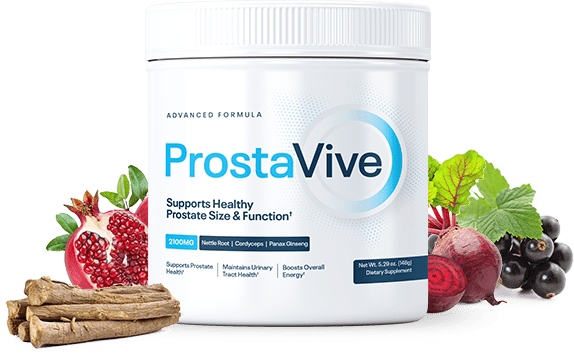
ProstaVive
Prostate-support product guide
View ProductCountry pages are useful only when the market changes the answer. MenPS uses verified local product availability, retailer routes, formulation differences, currency context and other market-specific facts where enough evidence exists to support a distinct page.
Add Men’s Performance Supplements to Google Preferred Sources or open this page in your preferred AI tool.

Explore the complete published product catalog. Each card opens the relevant MenPS product guide.
Prostate-support product guide
View Product
Nitric-oxide support guide
View Product
Prostate and urinary-support guide
View Product
Men’s performance product guide
View Product
Oral-health supplement guide
View Product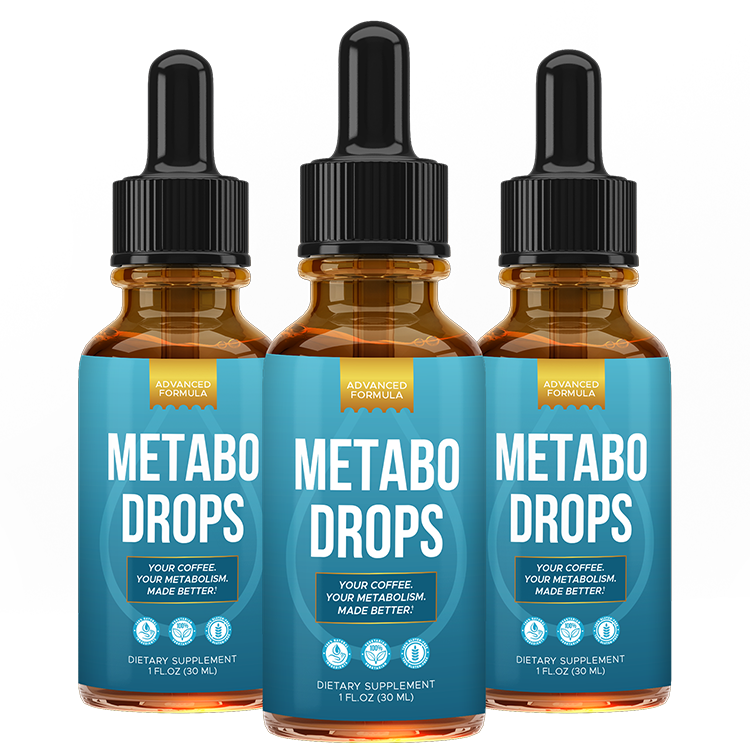
Coffee-added metabolic-support guide
View Product
Topical nail-care product guide
View ProductThese are the main discovery paths through the catalog. Use them to move between categories, ingredients, goals, quality attributes, markets and published product guides.
A major product market with broad retailer and category coverage.
Market-specific availability and retailer coverage as the catalog expands.
Canadian product and retailer availability where verified.
Australian market inventory and product availability when sufficient data exists.
German-market availability and product assortment where verified.
French-market product discovery as local coverage becomes meaningful.
Catalog coverage for products and retailers verified in Singapore.
Indian market availability and product discovery as verified inventory grows.
MenPS organizes products and formula attributes. MalePerformanceSupplements.com handles independent ingredient evidence, safety and research interpretation.
The current hub identifies eight priority markets: the United States, United Kingdom, Canada, Australia, Germany, France, Singapore and India. A market becomes a useful indexable destination only when MenPS can verify enough local product and availability information to make the page materially different from the global catalog.
At minimum, a surviving country page should answer which products are currently identifiable in that market and how that availability was verified. Currency, retailer, shipping, package, formulation or certification differences should be added only when current sources support them.
A global supplement catalog cannot assume that the same product list applies everywhere. Products can be widely sold in one country and difficult to obtain in another. Retailer ecosystems differ, currencies differ, certification visibility can differ, and manufacturers may distribute different formulations or package sizes across markets. Country pages exist to capture those real differences, not to create another set of keyword variations.
That distinction is essential for programmatic SEO. A page titled “Creatine Supplements in Canada” would add little value if it simply copied a global creatine list and changed the country name in the introduction. MenPS country pages should be based on verified market-specific product records. The page should know which products have actually been identified in the market, which retailers or official channels support that availability, when the information was checked and which local data fields make the page different from the global catalog.
The first indexability gate is inventory. A market page should not be published merely because the country is commercially attractive. The architecture can contain planned market entities, but the public page should wait until enough qualifying products have been verified to create a useful destination. The exact threshold can vary by page class, but the principle is consistent: no thin country doorway pages.
The second gate is unique local information. Market-specific availability is the minimum. Where reliable data exists, the page may also include currency, package sizes, local retailer channels, distribution differences and relevant product-status notes. MenPS should avoid making unsupported legal or regulatory claims. If local regulatory interpretation becomes necessary, it should be researched from current official sources before publication rather than inferred from another country.
Time sensitivity is particularly important for market pages. Retailer listings disappear, products go out of stock, formulations change and distribution agreements move. MenPS should record when a product was last verified in the market. A country page is therefore closer to a maintained database view than a timeless article. Updates are part of the page’s value.
Country pages can also improve user navigation when they remain connected to the wider entity graph. A user in the United Kingdom may start from the UK market hub, move into creatine products available there, filter for a quality attribute, and then open the MPS evidence page for creatine. A user in India may start with testosterone-support products available locally, then compare ingredient composition across the market. These paths are useful because the country layer changes the available product set without changing the underlying evidence.
MenPS should also resist the urge to create every possible country/category combination at once. A global architecture might eventually support many combinations, but only combinations with sufficient inventory and distinct intent should become indexable. If a market has ten verified products across the whole site but only one sleep-support product, a dedicated sleep-support-in-that-country page would probably be too thin. The country hub can carry the information until the dataset grows.
The same rule protects the relationship between MenPS and MPS. MPS does not need country copies of its evidence pages because the core clinical evidence for an ingredient is not rewritten for every market. MenPS handles the geographic product-discovery layer, while MPS provides the research layer. That division keeps the two domains complementary.
For users, country navigation should answer a practical question: “What can I actually compare in my market?” It should not pretend to determine what a user should buy, nor should it guarantee current stock. It should show the catalog’s last verified market information and make it easy to continue into category, ingredient and quality filters.
The strongest country pages will therefore be data-rich, frequently maintained and visibly different from the global catalog. If those conditions are not met, the page should remain planned or unindexed. That controlled publication policy is a core part of MenPS rather than a limitation.
Market pages should also make clear whether a product is merely visible through an international seller or has been verified through a locally relevant retailer or distribution channel. That distinction can matter to shipping, returns, pricing and practical availability. MenPS can store the type of market observation without overclaiming that a product is officially distributed everywhere it can technically be ordered.
As the data matures, country hubs can become useful aggregation points for categories with enough local depth. The United States may support many category-specific subpages earlier than a smaller market. Other countries may remain as single market hubs until the inventory justifies deeper expansion. This uneven growth is intentional. The architecture should follow the data rather than forcing identical folder depth across every geography.
This market-first approach also makes later branded expansion cleaner because a future product page can show where that product has actually been verified rather than displaying one generic global availability claim.