ProstaVive
Prostate-support product guide
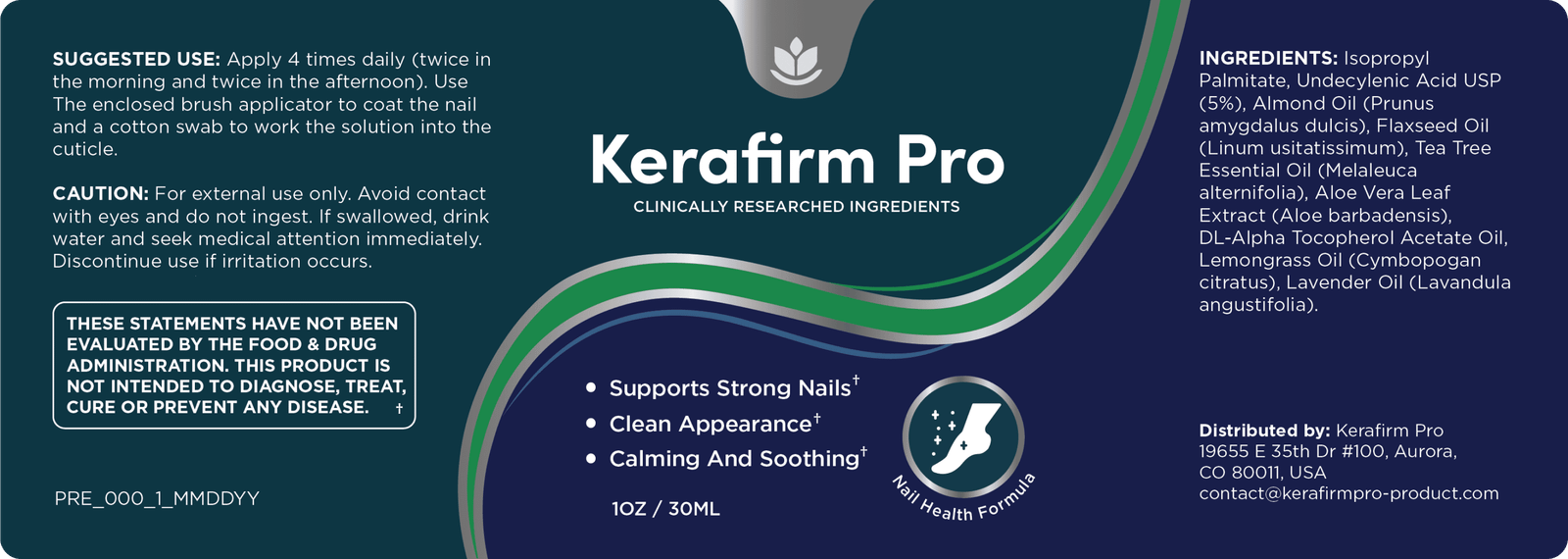
View ProductThe supplied KeraFirm Pro label identifies undecylenic acid USP 5% plus several carrier oils and botanical ingredients. MenPS separates those current label facts from broader merchant ingredient descriptions so shoppers can see which formula details are confirmed and which still need verification.
Add MenPS to Google Preferred Sources or open this ingredient page in your preferred AI tool.
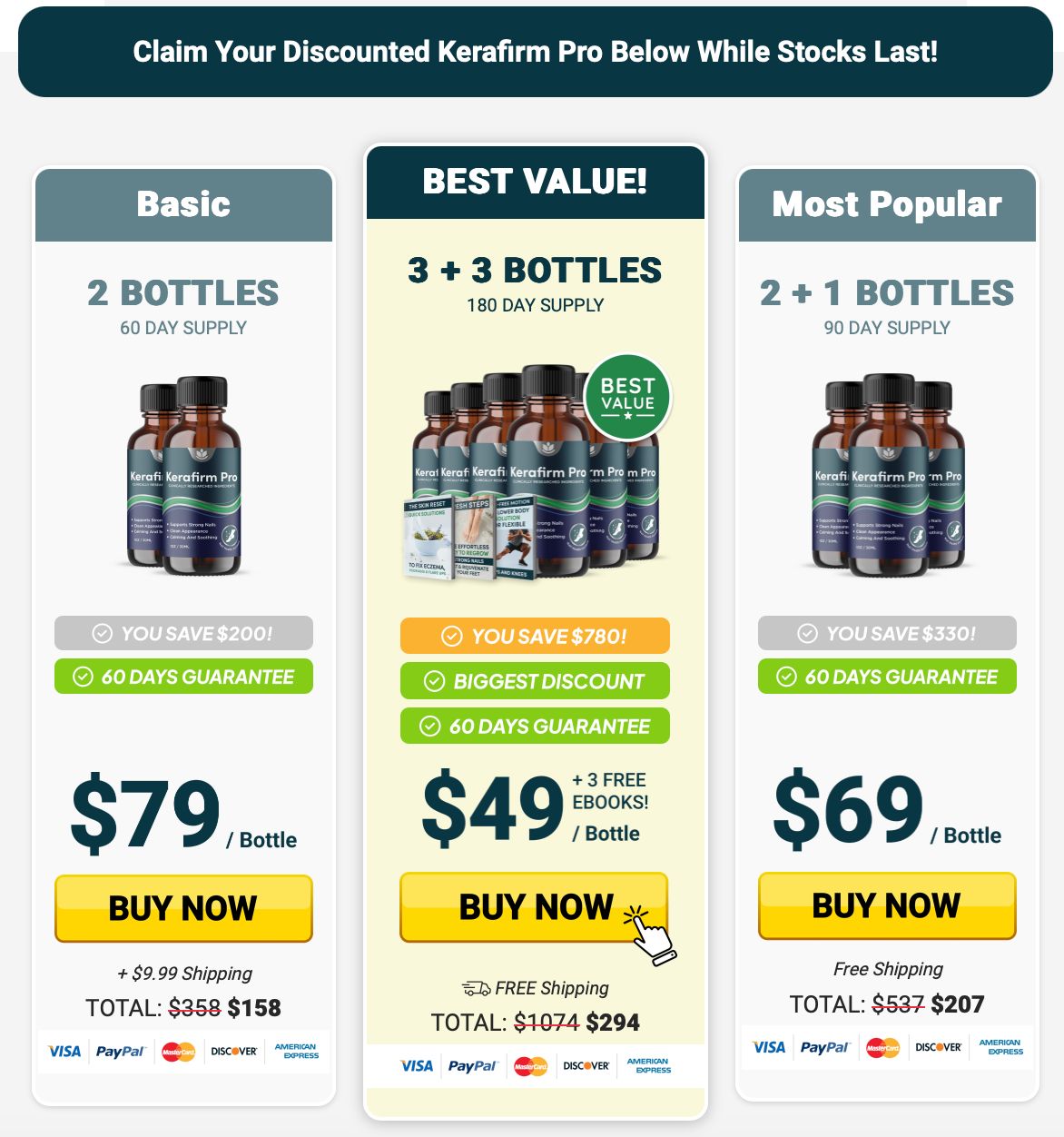
Explore the complete published product catalog. Each card opens the relevant MenPS product guide.
Prostate-support product guide
View Product
Nitric-oxide support guide
View Product
Prostate and urinary-support guide
View Product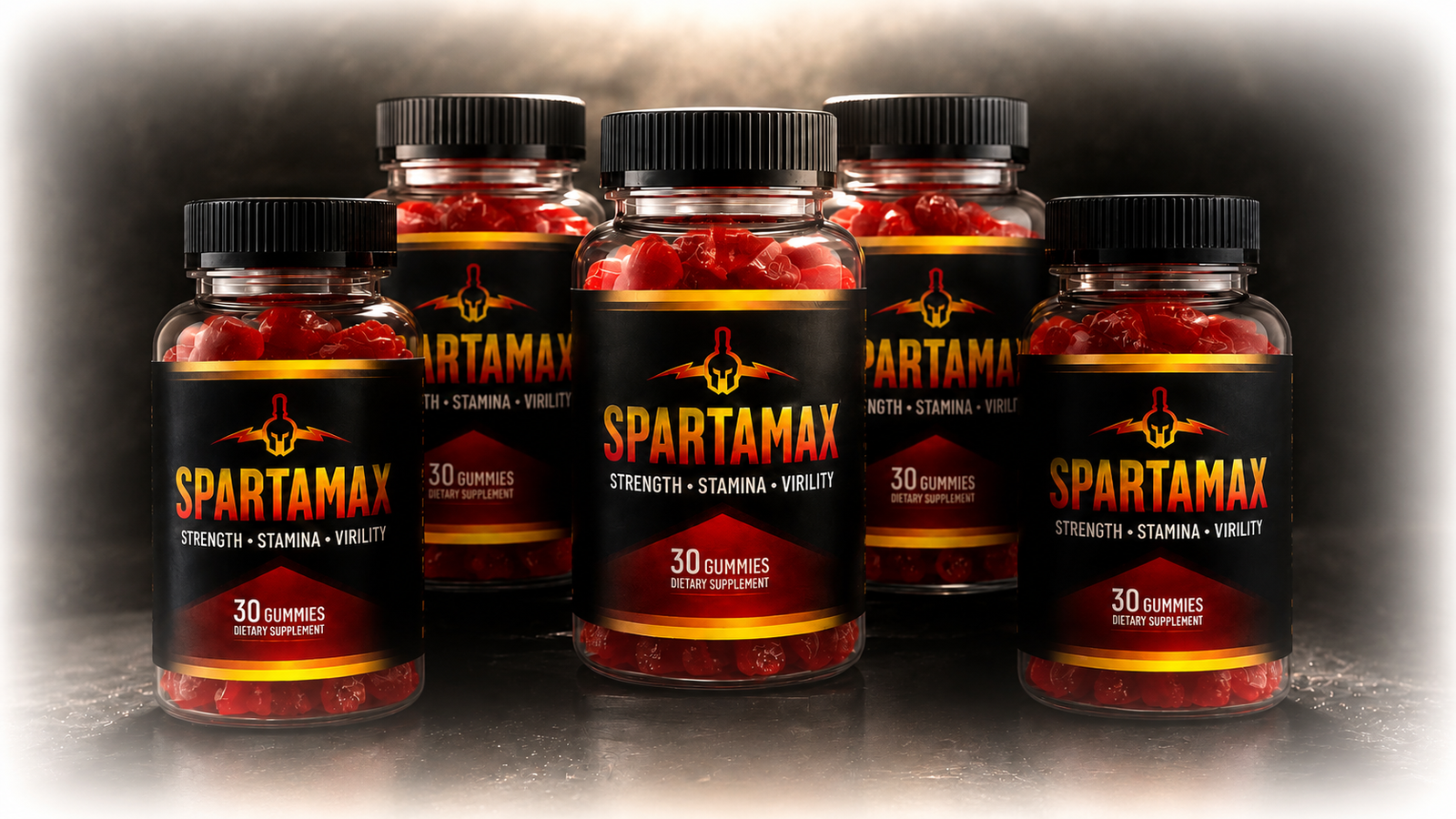
Men’s performance product guide
View Product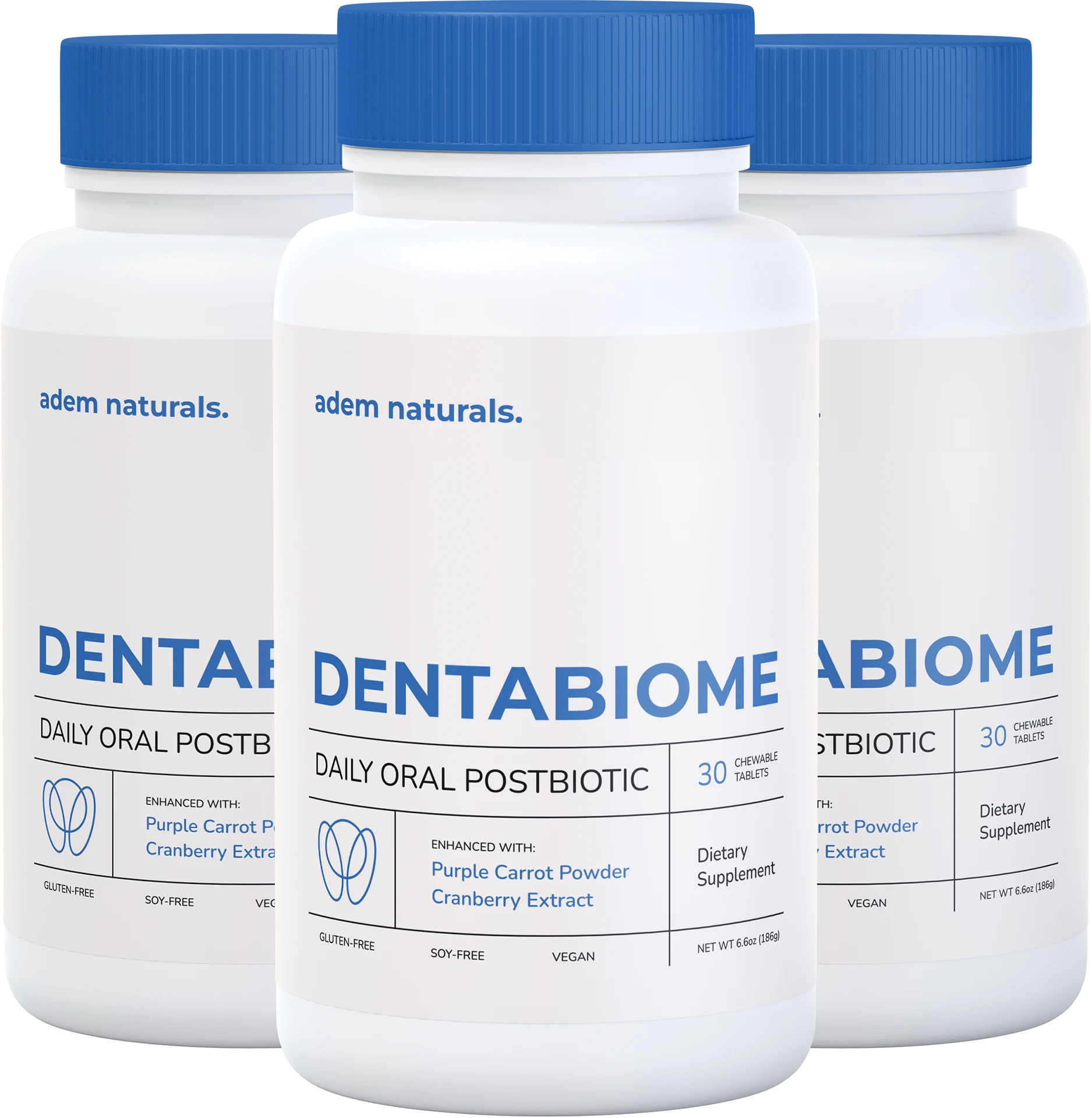
Oral-health supplement guide
View Product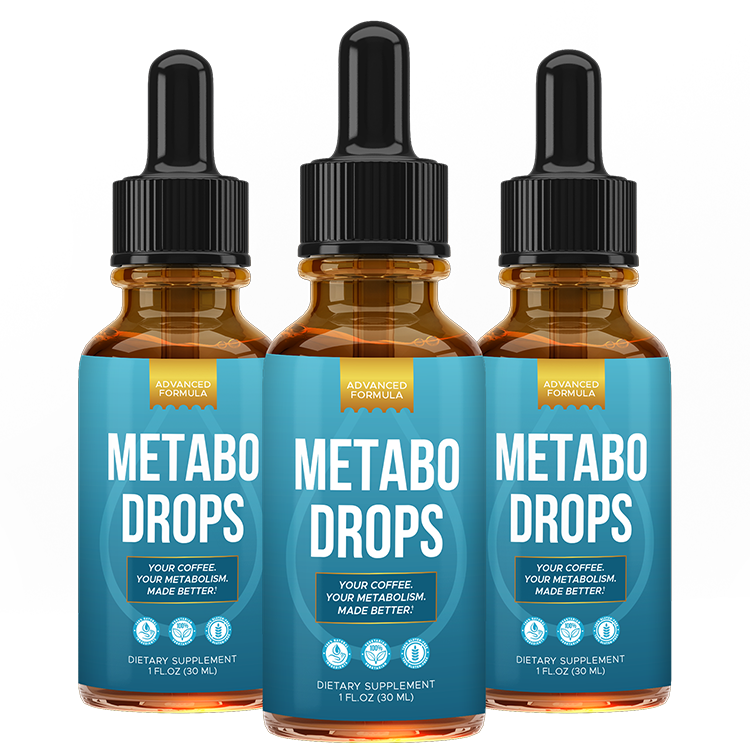
Coffee-added metabolic-support guide
View Product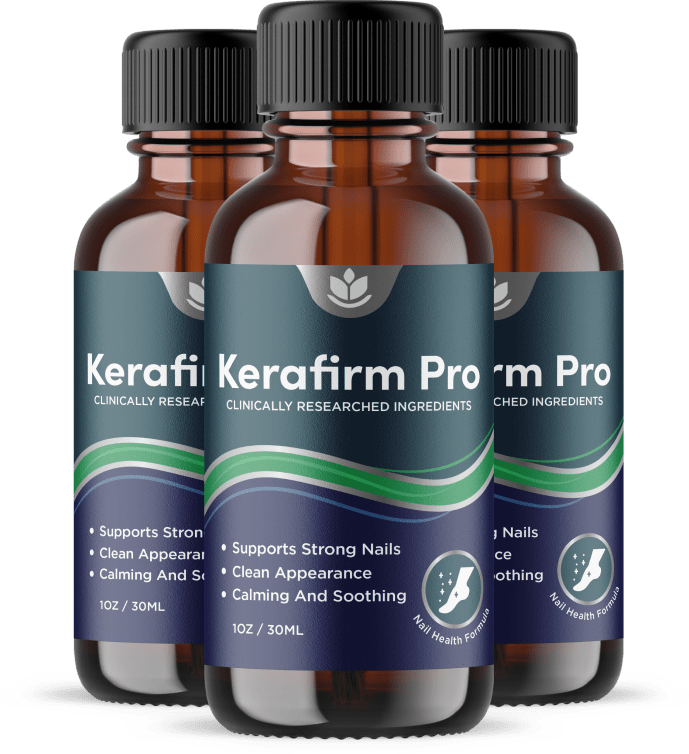
Topical nail-care product guide
View ProductThe supplied printed label identifies isopropyl palmitate, undecylenic acid USP 5%, sweet almond oil, flaxseed oil, tea tree essential oil, aloe vera leaf extract, DL-alpha tocopherol acetate, lemongrass oil and lavender oil.
MenPS treats that printed label as the strongest current product-specific formula source available for this catalog page. Merchant promotional material has named additional ingredients, but those should remain separately identified until a current label or official technical document confirms them.
| Ingredient | Current label status | Catalog role | What shoppers should verify |
|---|---|---|---|
| Undecylenic acid USP | Declared at 5% | Concentration disclosed | Current label concentration and product positioning |
| Tea tree essential oil | Listed | Botanical ingredient | No concentration shown in supplied label material |
| Sweet almond oil | Listed | Carrier / conditioning oil | Source, refinement and allergy-relevant details if material to the buyer |
| Flaxseed oil | Listed | Carrier / conditioning oil | No concentration shown |
| Aloe vera leaf extract | Listed | Botanical support ingredient | No concentration shown |
| DL-alpha tocopherol acetate | Listed | Vitamin E form | No concentration shown |
| Lemongrass oil | Listed | Essential oil | No concentration shown |
| Lavender oil | Listed | Essential oil | No concentration shown |
| Isopropyl palmitate | Listed | Formulation / emollient component | Current function and placement in the formula |
Undecylenic acid is listed at 5%, giving shoppers a specific concentration to compare.
Tea tree, lemongrass, lavender, aloe and several oils are listed without percentages in the supplied material.
Presence on a label does not establish which ingredient drives a finished-product result.
Merchant promotional material has referenced a broader ingredient set than the printed label supplied for review.
If the formula changes, the current bottle label or official technical documentation should take priority over older promotional copy.
Ingredient presence supports product description. It does not by itself establish finished-product efficacy.
Merchant materials reviewed for the wider KeraFirm project have also named ingredients such as clove bud, manuka, camphor, menthol, walnut and chia. Those names do not all appear on the supplied printed label.
There are several possible explanations: the merchant page may summarize an earlier formulation, a different production version, a broader marketing narrative or a formula description not fully reflected in the supplied image. The current materials do not establish which explanation is correct.
MenPS therefore does not merge the two lists into a single definitive formula. That approach keeps the catalog record useful for shoppers who care about current ingredients, sensitivities, product comparison and label transparency.
For a current purchase decision, prioritize the current bottle label and the current merchant checkout or technical documentation. Treat older promotional ingredient pages as secondary context when they conflict.
Check Current Merchant PageUndecylenic acid is the one ingredient in the supplied label with a disclosed percentage. That makes it unusually useful for product comparison because shoppers can compare not just ingredient presence but concentration.
MenPS records the 5% figure as a label fact. It does not turn the concentration into a claim that the finished KeraFirm Pro formula is clinically proven or equivalent to another undecylenic-acid product. Those evidence and regulatory questions are handled separately by MPS.

The MenPS ingredient page is a product-discovery record. The corresponding MPS evidence page examines undecylenic acid, tea tree oil, vitamin E, carrier oils, essential oils and the limits of transferring ingredient research to the finished KeraFirm Pro formula.
This separation helps prevent ingredient research from being presented as if it were a KeraFirm Pro clinical trial.
Read the MPS ingredients evidence reviewReturn to the MenPS KeraFirm Pro master page →
Continue to the active-ingredient guide →
A named ingredient is more useful when its concentration is also available.
Use the current label, not a copied ingredient list that may be out of date.
Brush-on liquids, creams, lacquers and oils can create different use and convenience tradeoffs.
Products that disclose more concentrations are easier to compare objectively.
Essential oils and nut-derived oils may matter for some shoppers even when they are not the primary active-style ingredient.
Ask whether research tested the ingredient, a similar formula or the exact finished product.
Ingredient transparency is most useful when it helps a shopper make a concrete comparison. KeraFirm Pro provides one particularly useful data point because the supplied label identifies undecylenic acid USP at 5%. That percentage gives buyers something more specific than a marketing phrase such as “contains antifungal ingredients.”
The rest of the label is less quantitative. Tea tree oil, sweet almond oil, flaxseed oil, aloe vera, vitamin E, lemongrass oil and lavender oil are named, but their concentrations are not supplied in the materials used for this page. That does not make the formula unusable as a catalog record, but it limits how precisely a shopper can compare it with another formula.
Product comparison also depends on source quality. A current printed label is normally more useful for formula identity than a sales page because it is tied to the physical product. Promotional copy remains valuable for understanding how the merchant positions the formula, but it should not silently override packaging when the two differ.
The merchant-list discrepancy is therefore an important information-gain element rather than a problem to hide. A shopper deciding between KeraFirm Pro and another topical nail product may care whether clove, manuka, camphor, menthol, walnut or chia are actually present in the current bottle. MenPS should say when the answer is unresolved rather than merging all historical or promotional references into one definitive list.
Ingredient presence also should not be confused with clinical performance. Tea tree oil has human research in fungal nail disease, and undecylenic acid has relevant antifungal context, but the exact KeraFirm Pro formula has its own evidence question. The appropriate MenPS role is to expose the product data cleanly and hand the deeper science to MPS.
For practical shopping, compare KeraFirm Pro against other products on six fields: current label, disclosed concentrations, application format, bottle size, sensitivity-relevant ingredients and the quality of the evidence attached to the exact formula. Those fields create a more useful catalog comparison than generic claims such as “natural,” “strong,” or “advanced.”
The supplied current label identifies undecylenic acid USP at 5%. It also lists several oils, botanical ingredients and formulation components.
Yes. Tea tree essential oil appears on the supplied printed label, although the concentration is not shown in the materials used for this page.
The supplied materials do not resolve the discrepancy. MenPS therefore keeps promotional-only ingredients separate until current packaging or official technical documentation confirms them.
No. Ingredient presence and finished-product clinical evidence are different questions.
Use the linked MalePerformanceSupplements.com KeraFirm Pro ingredients-evidence page for the science, safety and evidence limitations.
Check the official purchase route, current merchant terms, package verification and common buying mistakes.
Open the buying guideReview the product's topical application format, label-first usage checks and practical handling considerations.
Open the usage guideSee the consolidated product, formula, package, buying and usage questions for KeraFirm Pro.
Open the FAQCompare KeraFirm Pro with broader topical nail-care product types by format, ingredient disclosure, convenience, evidence and buying criteria.
Explore alternativesCompare KeraFirm Pro with tea-tree-oil-focused nail products by formula structure, label transparency, convenience and evidence.
Compare with tea tree oilCompare KeraFirm Pro's 5% undecylenic-acid label with other topical products by concentration, format, transparency and total cost.
Compare undecylenic-acid products